
What Would a Miccosukee Casino Mean for Walton County?
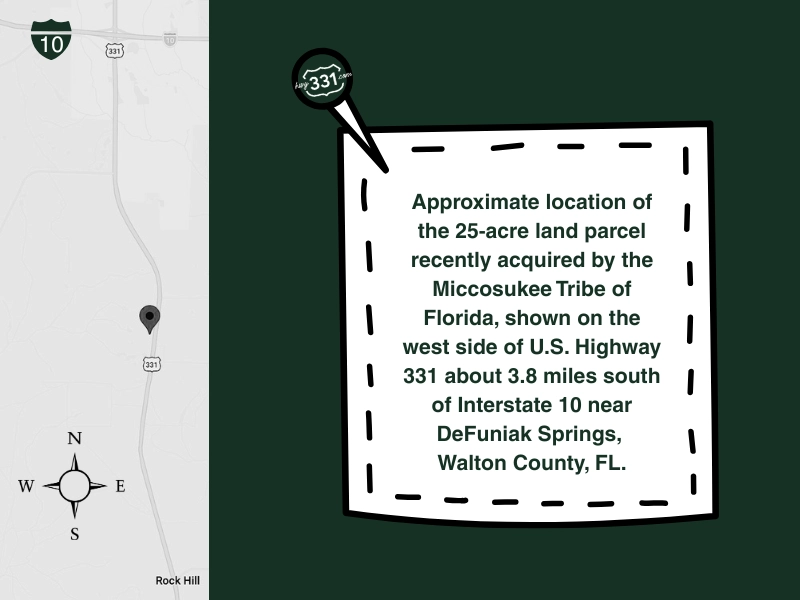
A 25-acre parcel of land on the west side of U.S. Highway 331 — roughly 3.8 miles south of Interstate 10, between DeFuniak Springs and Freeport — has become the focal point of a conversation about gambling, jobs, and the economic future of Walton County.
The Miccosukee Tribe of Florida purchased the property for $2.25 million in January 2026. The tribe has not announced any plans for the land and has not applied for local building permits, but the purchase has fueled persistent speculation about a potential casino. The Miccosukee Tribe already owns and operates the Miccosukee Casino and Resort in western Miami-Dade County, a facility that opened in 1999.
The latest examination of what a casino could mean for the area comes from Nicole Gislason, executive director of the Haas Center for Business Research and Economic Development at the University of West Florida. The Haas Center conducts economic impact modeling for the Florida Panhandle region, and Gislason’s analysis weighs the potential benefits — jobs, tourism revenue, and increased economic activity — against the costs that come with hosting a gaming operation, including infrastructure demands and public safety expenses.
The property’s location on Highway 331 places it directly along the primary transportation corridor connecting Freeport to DeFuniak Springs and Interstate 10. For Freeport residents, any significant commercial development at that site would alter traffic patterns, housing demand, and the character of the corridor that serves as the city’s main link to the county seat and the interstate system. The land sits near the small community of Rock Hill, in a stretch of highway that is currently rural and largely undeveloped.
The political landscape surrounding the possibility is already complicated. At a September 2025 Walton County Commission meeting, commissioners discussed the tribe’s interest in the Panhandle, with at least one commissioner expressing outright opposition to a casino. The board appeared to agree that any conversations with the tribe should be routed through the county’s Economic Development Administration. Two commissioners inferred that the tribe’s interest is likely related to gaming and the potential to bring gambling to Walton County.
Florida’s tribal gaming landscape adds another layer of complexity. The Seminole Tribe holds a 30-year gaming compact with the state that grants exclusive rights to Class III gaming — including sports betting, roulette, and craps — in exchange for revenue sharing that exceeds $500 million annually. The Miccosukee Tribe operates a Class II facility in Miami under different legal terms and does not have a revenue-sharing compact with the state. Whether a Miccosukee casino in Walton County would require state approval, a new compact, or could proceed under existing tribal sovereignty provisions remains an open legal question.
For now, the land sits vacant and the tribe remains silent about its intentions. But the questions raised by the purchase — and the expert analysis now examining the potential economic ripple effects — ensure that the conversation will continue as Walton County navigates its growth and development priorities in the months ahead.
Originally reported by Mid Bay News, MyPanhandle (WMBB), and HWY 331.
Image: HWY 331
