
Freeport Council Reviews Fiscal Year 2026-27 Budget, Settles on 3% Raise and September Hearings
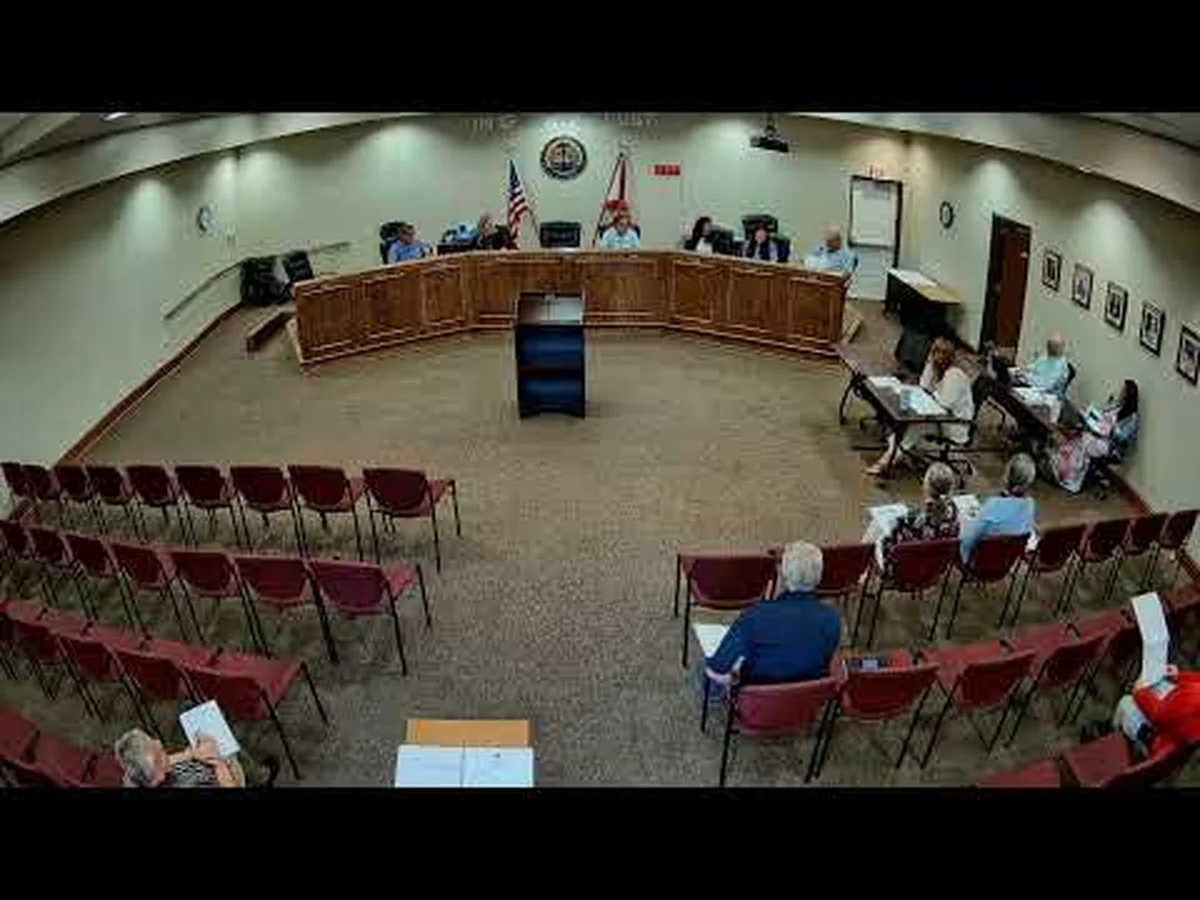
Freeport’s city council and finance staff walked through the proposed fiscal year 2026-27 budget on August 3rd, agreeing to a flat 3% cost-of-living raise for employees, scheduling two public hearings in September, and reviewing major water, sewer, and street projects. Budget Director Bruce Briggs opened the workshop by thanking department heads for their cooperation and council members for rescheduling the first budget hearing, which has been moved to September 9th. The council confirmed the second and final hearing will remain September 15th, with ratification of the date change expected at the upcoming regular council meeting.
Briggs noted the need for a third budget workshop to wrap things up, tentatively set for August 18th at 5:00 p.m. The council had briefly considered whether the meeting could be wrapped up that same evening, but agreed to circle back at the end of the night depending on how comfortable members were with what was presented. Briggs said the final workshop would either bring the process to a clean closure or address whatever remaining detail the council wanted to revisit.
The revenue and expenditure picture is generally healthy, Briggs told the council. Water is running under revenue because the Wagon Wheel project and the 3280 well and tank were not completed in fiscal year 2026 and will roll into next year’s expenditures, a timing issue the city always planned to fund through cash reserves. Sewer is running slightly over expenditures, and the city remains in a strong cash position to manage outlays. The general fund will be significantly higher than normal, largely because of a heavy slate of road and highway work.
On the budget highlights summary, most departments are running very close to the prior year. Planning is slightly over due to work on a new comprehensive plan and initial phases of the Ronnie Brandon Memorial Park. Utility billing shows minimal variance despite the addition of one full-time building clerk position. Streets show the largest increase, driven by the Marquee Way West and East projects, turn lanes, and related highway activity, with roughly $8.9 million in grants expected to offset a portion of the $17 million in planned street spending.
Council members pressed Briggs on the streets line item. One member asked whether the $17 million figure included the Marquee Way cut-off and the turn lanes discussed at the last meeting. Briggs confirmed it did, noting the grant revenue would offset a significant share. The city also expects a $500,000 grant toward the 3280 well project.
Sewer is slightly over the prior year, mainly due to approximately $750,000 in lift station manhole work that was deferred from last year. Briggs said corrosion is getting bad and the manholes need to be addressed. That cost is partially offset by the completion of the reuse pumps project, which came in at $1.1 million and is now done.
The department-by-department walkthrough highlighted several staffing changes. The planning department is moving one existing Planner II into a Senior Planner role and backfilling with a new Planner I, bringing the department to nine positions, with two still actively being recruited. Council members noted the department had been short-staffed and is currently operating with seven, with the goal of reaching nine once the hires are completed.
Parks and recreation saw discussion around Christmas decorations. The city has been adding holiday displays each year at City Hall and the sports complex, and the request this year included roughly $40,000 to finish out decorations for the community center parking lot. Council members asked whether the amount could be trimmed, given that the City Hall campus is nearly full of displays. After some back-and-forth, the council suggested reducing the line item to around $30,000 and revisiting it next year, with the understanding that most of the existing decorations are new and should last several seasons before needing replacement.
On water infrastructure, Briggs outlined the carryover of the Wagon Wheel and 3280 well and tower projects, which together account for roughly $7 million in expenditures moving into the new fiscal year. A $500,000 grant will help offset the 3280 work. Placeholder lines were added for Mountain Road and Shadow Lane sewer lines, where residents may pressure the city to extend water service in areas that already have sewer. Small equipment requests include a Scag mower deck, GIS mapping tools, valve exercise equipment, and a one-ton work truck.
Sewer department staffing includes the addition of two maintenance technicians, though a council member flagged that the salary figure shown appeared to cover only one person rather than two. Briggs acknowledged the discrepancy and said he would correct it. Employees are also expected to earn Class C wastewater and Class C water certifications, which will trigger pay increases.
Major sewer equipment requests include a mounted bypass pump for use at the elementary school, a line camera system to begin inspecting sewer lines, a trencher with a smaller footprint than the city’s current skid steer, and a pressure data logger to avoid over-pressurizing the system. Briggs noted that Paul, who was absent, had requested a boring machine to allow the city to do work in-house rather than contracting with outside construction firms.
On the insurance and benefits front, Briggs delivered unexpectedly good news on property insurance. Despite adding a $75,000 sewer plant and $8,000 community center to the city’s asset rolls, the city’s insurance broker expects roughly a 12% reduction in property coverage costs. The overall insurance estimate rose from $391,000 last year to about $440,000, but Briggs said the reduction in property rates is softening the impact considerably. Auto insurance is up about 12%, though that represents a much smaller dollar figure.
The council also tackled a complicated disability insurance issue. The city’s current provider, Hartford, has been inconsistent in how it applies the plan and has refused to clarify tax handling, raising concerns that disability payments could be improperly taxed. Briggs proposed switching to Humana, which can package disability with the city’s existing dental and vision plans and offer a discount. To resolve the tax complication, the recommendation is to have employees pay the premium directly, approximately $45 per month, through payroll deduction. The city would still collect and submit the payments to secure the group discount.
Health insurance negotiations also drew praise from the council. Florida Blue had initially sought a 10.2% increase, but after the city obtained a competing quote from United Healthcare, Blue Cross Blue Shield agreed to hold the increase to 5%, or about $65 per employee per month. A council member credited the negotiating team and noted that the city is now in a large group with Blue Cross Blue Shield, which created its own complications but ultimately preserved the existing plan offerings. The council signaled its commitment to staying with Blue Cross Blue Shield, and Briggs said he would place the formal decision on the next regular meeting agenda so the carrier can proceed with September enrollment.
The most substantive policy discussion of the evening came on employee pay raises. Briggs presented graphs showing the effect of a flat $1-per-hour increase, which would translate to widely varying percentage raises depending on an employee’s current pay rate, ranging from roughly 2% at the high end to more than 7% at the low end. Council members pushed back, noting the city had worked hard to move away from that approach and toward a flat percentage across the board to avoid compression issues.
One council member said the fluctuation would cause problems and that the city does not want to return to a system that creates pay disparities. The group agreed to a 3% across-the-board raise, which aligns with recent Social Security COLA figures and the Consumer Price Index for the South region, currently running around 3.2%. Briggs said he would update the budget packet with the 3% figure for the next workshop.
Looking ahead, the council set a final budget workshop for August 18th at 5:00 p.m., with the two statutory public hearings scheduled for September 9th and September 15th. Briggs said the budget is on track and that, barring any challenges raised at the initial hearing, the city should be able to publish the required notices and adopt the budget on schedule.
