
Emerald Coast Motor Club Location Faces Market Questions as County Review Continues
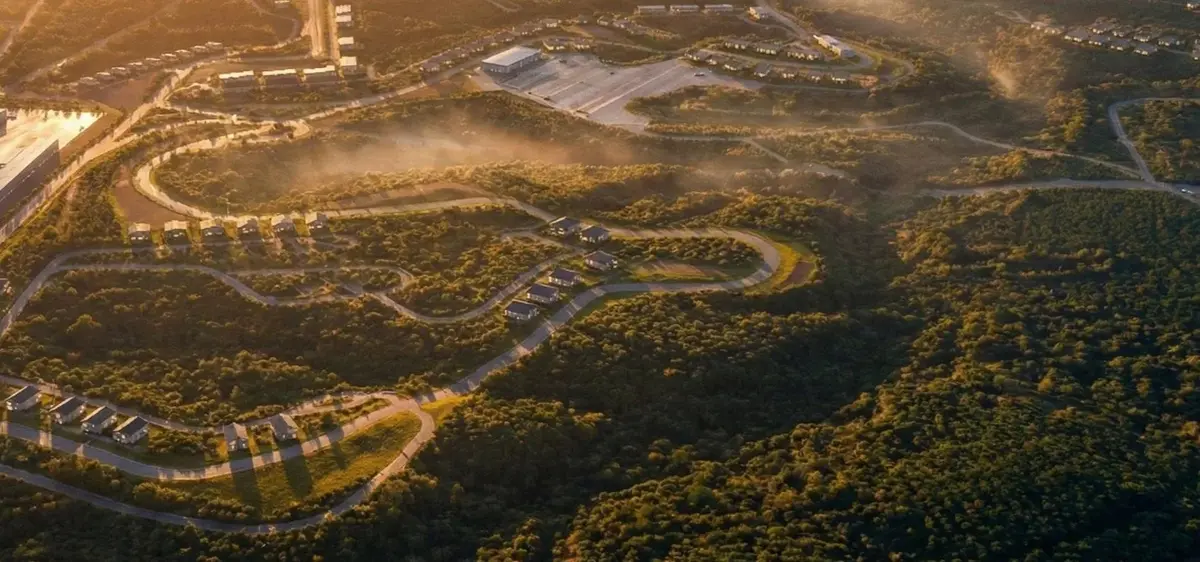
The proposed Emerald Coast Motor Club — a 751-acre private motorsports destination planned for land west of US 331, about three miles south of Interstate 10 — is drawing new scrutiny over whether its rural Walton County location can support the scale its developers envision, with the county’s technical review now extended to October 21.
The latest questions come from a detailed opinion analysis published Tuesday by Mid Bay News, which measured the project against the track record of Brad Oleshansky, the developer behind Tampa’s Motor Enclave. Oleshansky’s rule for building a profitable private motorsports club is blunt: “You can’t be in a rural area.” Florida law classifies Walton County as just that, and the analysis asks whether the site off Forest Oak Road — on the US 331 corridor north of the city that Freeport residents use to reach I-10 — can supply the garage buyers, members and corporate event clients the project needs to finance construction and sustain operations.
The comparison is striking in its proportions. Oleshansky’s Motor Enclave occupies 200 acres with a 1.72-mile circuit and more than 300 private garages. Emerald Coast Motor Club proposes roughly 751 acres, a 3.2-mile course, car condos, villas and other amenities — a footprint nearly four times larger, in a county the analysis notes has about 93,288 residents to Hillsborough’s 1,574,115. That disparity is the heart of the question: nearly four times the acreage, in a county with approximately 94 percent fewer residents and 92 percent fewer employer establishments.
Oleshansky built his Tampa club only after mapping wealth, growth and vehicle registrations nationwide, and he settled on land beside a freeway and Tampa Executive Airport. His typical garage buyer was a professional or business owner who wanted a club “20 minutes away” — close enough for convenient, repeated use. Corporate events, he has said, are “the business end of it,” and those clients need to be nearby. Walton County’s affluent residents, second-home owners and 4.586 million annual visitors are genuine advantages, the analysis acknowledges, but beach vacationers are not automatically year-round garage buyers in DeFuniak Springs.
ECMC developer Steve Denton has said his team commissioned a financial feasibility study, prepared an investment memorandum and aligned 12 investors, according to MRC Motorsports. The analysis gives those statements their due but notes they do not give the public the underlying market assumptions, construction budget, financing commitments or garage sales figures.
The market questions are landing as the county’s review is still in motion. Walton County’s Technical Review Committee took up the conceptual planned unit development in September, where the project drew significant public concern over noise, environmental impact and traffic. The committee continued the application to October 21 to allow further review of technical requirements, including a land use restriction agreement and noise mitigation plans, and committee members emphasized the need for a detailed sound study before the project advances.
For Freeport, the stakes run along a familiar line on the map. The site sits in the US 331 corridor between Interstate 10 and the city, the same stretch of highway that carries Freeport residents to the interstate and South Walton workers home at night. County approval of the motorsports park — or its failure to find financing, as the analysis warns could leave an unfinished project beside neighboring residents — would shape development pressure, traffic and noise expectations on the corridor for years to come.
Originally reported by Mid Bay News. Image: Emerald Coast Motor Club.
