
Civil War Exile: How Leonard Destin Was Forced to Freeport in 1861
In the summer of 1861, the Civil War reached the Emerald Coast and upended the life of Captain Leonard Destin, the Connecticut-born fisherman who gave Destin its name. Branded a suspected Union collaborator by the Walton Guards, Destin and his family were forced from their home at East Pass and relocated to Freeport, then known as Four Mile Landing, under armed guard.
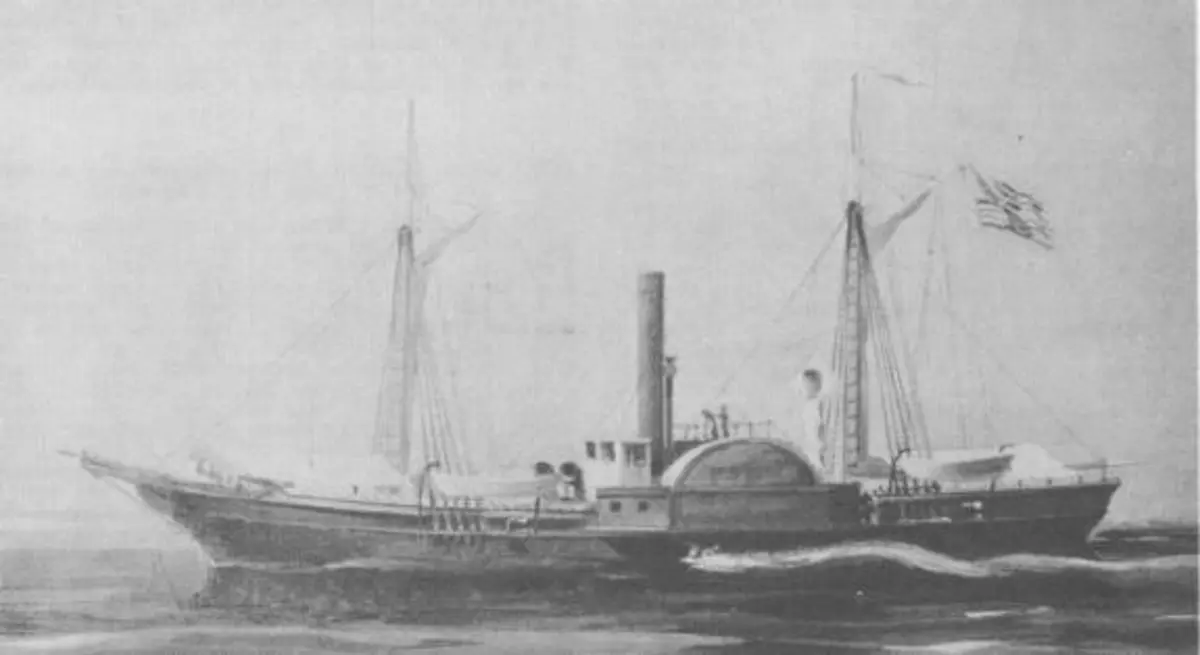
Leonard Destin had lived and fished at East Pass — the inlet connecting Choctawhatchee Bay to the Gulf of Mexico — since well before the war. He was a Yankee in a Confederate state, born in New London, Connecticut, and that origin alone made him a figure of suspicion when the Union Navy began blockading the East Pass in the spring of 1861. The USS Mohawk, USS Wyandotte, and later the USS Water Witch took turns stationing gunboats at the inlet, firing cannons during training exercises and occasionally skirmishing with the Walton Guards, the local Confederate militia camped at what is now Fort Walton Beach.
The suspicion crystallized around a single encounter. According to the log of the USS Water Witch, Union troops came ashore on July 12, 1861, and seized Destin’s fishing sloop along with personal items — a double-barreled shotgun, a compass, shoes, a coffee mill, and a hat. Destin rowed out to the warship the next day to demand the return of his property. The crew returned everything except the shotgun. To the Walton Guards watching from shore, the sight of a Yankee-born fisherman rowing out to a Union warship looked like collaboration — or worse, espionage.
Lt. Henry T. Wright, a 19-year-old member of the Walton Guards stationed at Camp Walton, wrote to his father in Pensacola on August 16, 1861: “Our captain received orders from headquarters to move Captain Len, alias Destin, who is suspected to have carried on trade with the enemy from East Pass.” Wright’s letter, which survives today in the possession of Destin’s great-great-great-grandson Parker Destin, is the only known primary source document describing events at East Pass and Camp Walton during the Civil War. A second letter from Wright, dated August 11, confirms the order had already been issued.
Whether Destin was actually “trading with the enemy” or simply trying to recover stolen property remains a matter of historical debate. The Destin Log’s history columnist has argued the family likely left voluntarily for their own safety, exhausted by the constant gunfire and the danger of living between two warring forces. The AP, reporting on the Wright letter in 2019, noted that Destin was detained by Confederate troops near Freeport for six to eight months until the Walton Guards were reassigned to Tennessee as part of the 1st Florida Infantry. He returned to East Pass sometime in 1862.
What is certain is that the relocation brought the Destin family to the settlement then called Four Mile Landing, on the north shore of Choctawhatchee Bay — a community that would later be renamed Freeport. Leonard and his wife Martha, who had married there in 1851, waited out the war while the settlement around them slowly grew. Their fifth child, Hattie Destin, was born at Four Mile Landing on November 18, 1862. The area’s name was changed to Freeport after the war ended.
The story connects two of Northwest Florida’s most recognizable places — Destin and Freeport — through a moment of wartime upheaval that predates either city’s incorporation. The USS Water Witch was later captured by Confederate forces in 1864 near Ossabaw Island, Georgia, and taken into Confederate service as the CSS Water Witch until it was destroyed to prevent recapture. The Walton Guards’ buried cannons were unearthed years ago and are now on display at the Indian Temple Mound Museum in Fort Walton Beach. And the Wright letter, given to Parker Destin by a Jacksonville historian who understood its significance, offers copies to the Destin History and Fishing Museum and area colleges — ensuring that the story of a fisherman caught between North and South remains accessible to future generations.
Originally reported by Mid Bay News, The Destin Log, and the Northwest Florida Daily News.
